Research Directions

Experiments and simulations of 2D materials

Atomically thin semiconductors such as MoSe2 host dilute, strongly interacting electrons whose crystals, liquids, and mixtures of the two can now be imaged directly and probed optically. We work with experimental groups to model these systems under the conditions of the actual device.

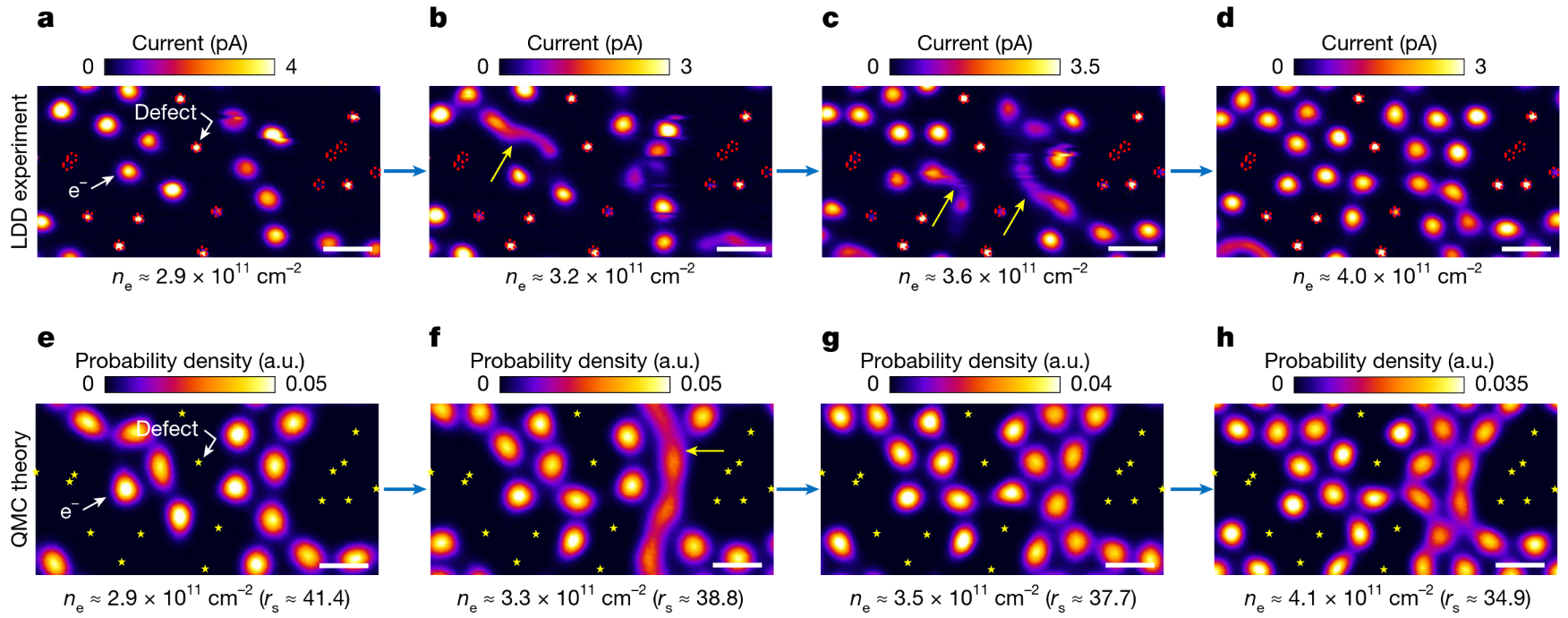
Because our quantum Monte Carlo calculations are done in real space, they can take in the actual conditions of a device, such as a defect map measured by scanning tunneling microscopy, and produce predictions that can be compared with experiment quantitatively.

Visualizing the impact of quenched disorder on 2D electron Wigner solids

Z. Ge, C. Smith, Z. He, Yubo Yang, Q. Li, H.-L. Kim, Z. Xiang, J. Xiao, W. Zhou, S. Kahn, A. Hu, M. Erdi, R. Banerjee, T. Taniguchi, K. Watanabe, S. A. Tongay, M. A. Morales, S. Zhang, F. Wang, M. F. Crommie

Defect positions mapped by STM in bilayer MoSe2 were fed directly into NQS simulations, which reproduced the imaged Wigner solids and separated the roles of disorder and interaction in stabilizing them.

Abstract

Thanks to major advances in scanning tunneling microscopy (STM) and neural-quantum-state (NQS) techniques, we were able to quantitatively understand the behavior of electrons in the presence of various densities of long-range and short-range disorder in bilayer MoSe2 devices. The location and strength of the disorder were mapped by STM and fed into the NQS simulations, enabling direct and realistic modeling of the experimental conditions. The NQS simulations matched the experiments to high fidelity and allowed us to vary the disorder and interaction strengths separately.
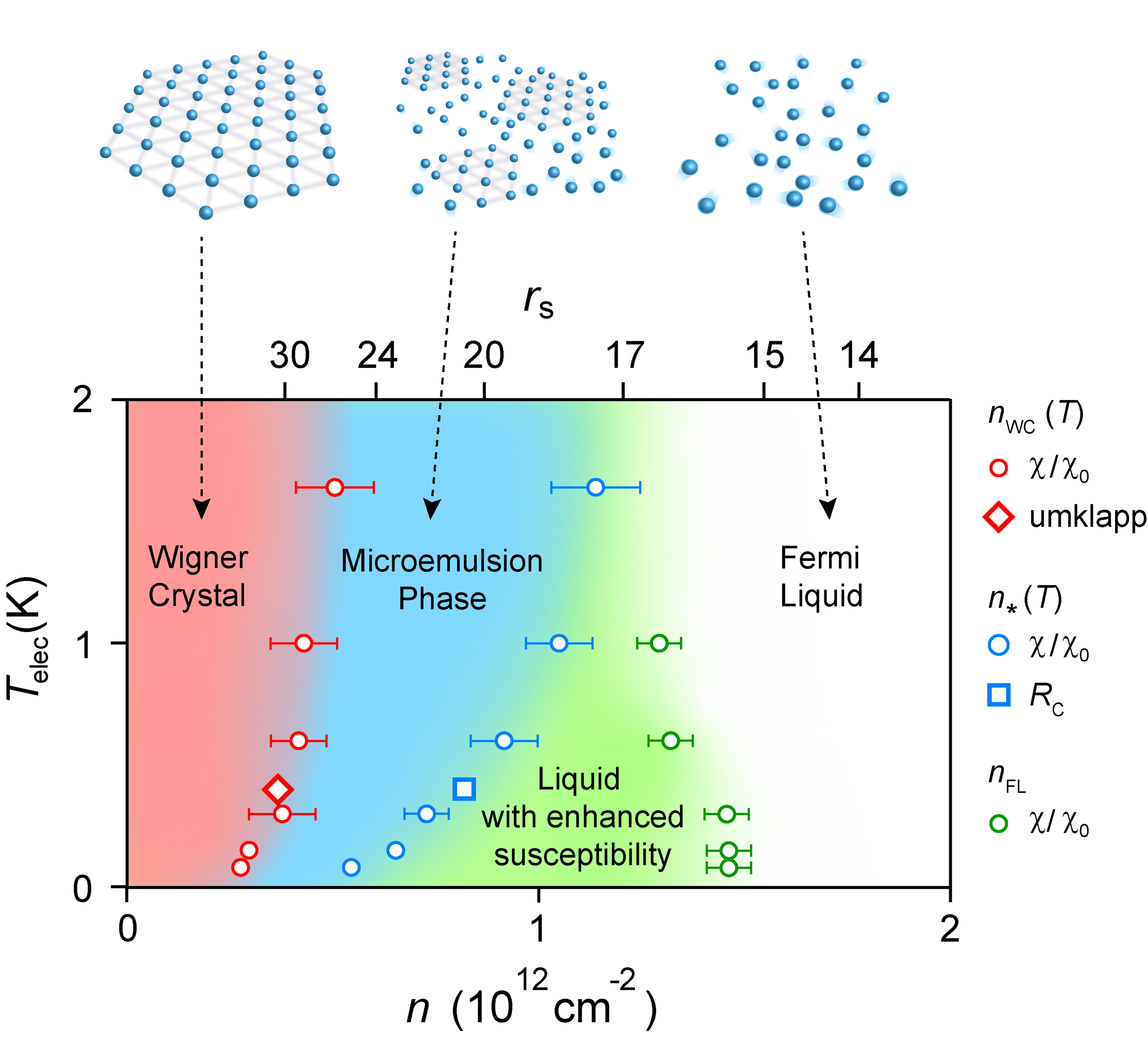
Observation of an electronic microemulsion phase emerging from a quantum crystal-to-liquid transition

J. Sung, J. Wang, I. Esterlis, P. A. Volkov, G. Scuri, Y. Zhou, E. Brutschea, T. Taniguchi, K. Watanabe, Yubo Yang, M. A. Morales, S. Zhang, A. J. Millis, M. D. Lukin, P. Kim, E. Demler, H. Park

Optical spectroscopy of monolayer MoSe2 reveals a mixed state between Wigner crystal and electron liquid, a distinct electronic microemulsion phase.

Abstract

We use cryogenic reflectance and magneto-optical spectroscopy to observe the signatures of the mixed state between an electronic Wigner crystal and an electron liquid in a MoSe2 monolayer. The transit into this microemulsion state is marked by anomalies in exciton reflectance, spin susceptibility, and Umklapp scattering, establishing it as a distinct phase of electronic matter.

Moiré materials simulation

When two atomically thin crystals are stacked with a small twist or lattice mismatch, their interference creates a moiré superlattice with a period hundreds of times larger than the atoms. Electrons doped into this landscape are dilute and strongly interacting, and the long-range Coulomb repulsion dominates. The resulting phases, from Wigner crystals to correlated insulators and emergent topology, are tunable by twist angle, gate voltage, and material choice.

We model these systems with accurate numerical simulations such as neural quantum states (NQS), where neural networks are used to represent the many-electron wavefunction. One NQS ansatz may be able to describe liquids, crystals, and everything in between. Ongoing work extends this toolkit to moiré electrons in strong magnetic fields, where charge order and topology compete.

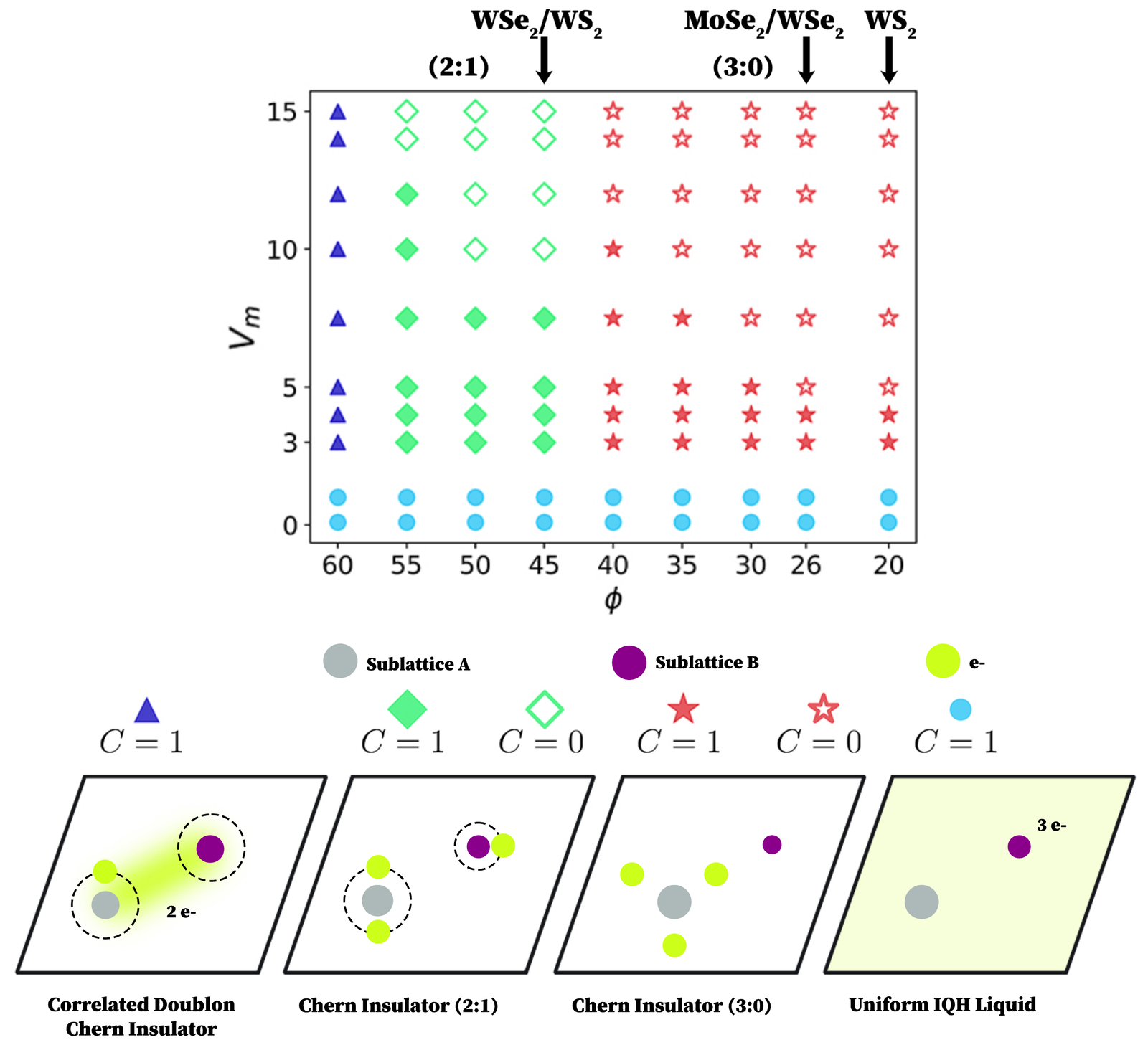
Tunable topological charge order in magnetic moiré systems

C. Smith, Yubo Yang, S. Zhang, M. A. Morales

At Landau-level filling one with three electrons per moiré cell, NQS finds an extended regime between the quantum Hall liquid and the Wigner molecular crystal where molecular charge order coexists with a quantized Hall response, at twist angles and fields within reach of current experiments.

Abstract

Two-dimensional electrons in a strong magnetic field can form incompressible quantum Hall liquids or electron crystals. Using neural quantum states, we map the ground-state phase diagram at Landau-level filling νB = 1 in a moiré superlattice potential with three electrons per moiré cell. In the deep triangular limit the electrons form the topologically trivial Wigner molecular crystal of three-electron artificial atoms; as the potential depth is lowered, molecular charge order remains while a quantized Hall response emerges. At the honeycomb point, doublons provide an emergent Ising degree of freedom whose short-range correlations within the Chern insulator grow with interaction strength and eventually break sublattice symmetry, forming a Néel CDW. The topological molecular regime lies at twist angles and magnetic fields directly accessible to current experiments.

Singlet-triplet transition of rotating moiré atoms in a magnetic field

C. Smith, Yubo Yang, S. Zhang, M. A. Morales

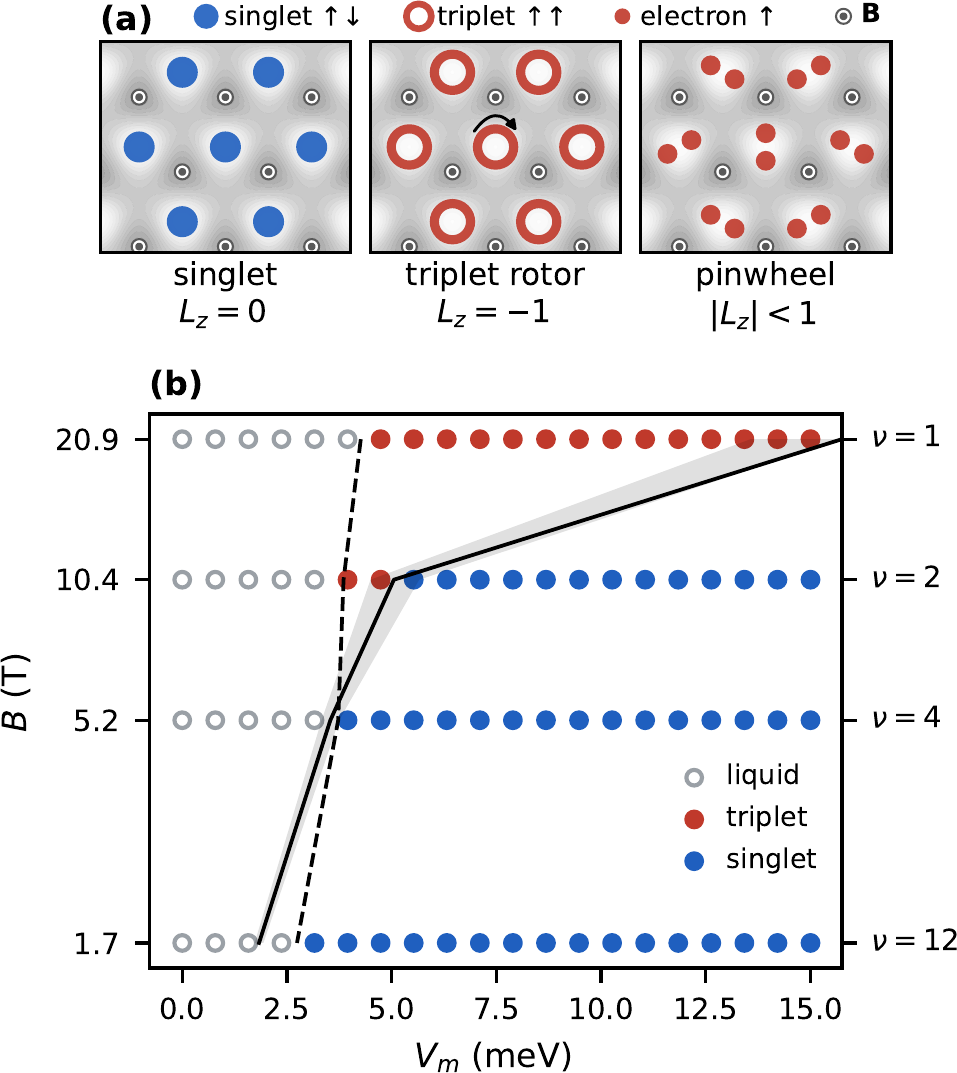
Two-electron moiré atoms in a magnetic field are spin-triplet rotors carrying a persistent current at strong field, and turn into non-rotating singlets as the wells deepen. At the transition their orbital magnetic moments reverse sign, a signature accessible to magnetometry.

Abstract

Moiré superlattices can bind several electrons to each potential minimum, forming few-electron moiré atoms. Using neural quantum states with full Landau-level mixing and both spin sectors, we map the ground state of two-electron moiré atoms as a function of moiré depth and magnetic field. At strong field each atom is a spin-triplet maximum-density droplet with angular momentum ⟨Lz⟩ = -1 and a persistent circulating current. Deepening the wells drives a singlet-triplet transition to non-rotating spin-singlet atoms, the collective analog of the singlet-triplet transition of two-electron quantum dots. At the transition, the orbital magnetic moments of the atoms reverse sign as their spin polarization switches. If the atoms are instead polarized by other means, the rotors lock at weak field into a crystal of dimers in a pinwheel pattern.

Neural network discovery of paired Wigner crystals in artificial graphene

C. Smith, Yubo Yang, Z.-Q. Wan, Y. Chen, M. A. Morales, S. Zhang

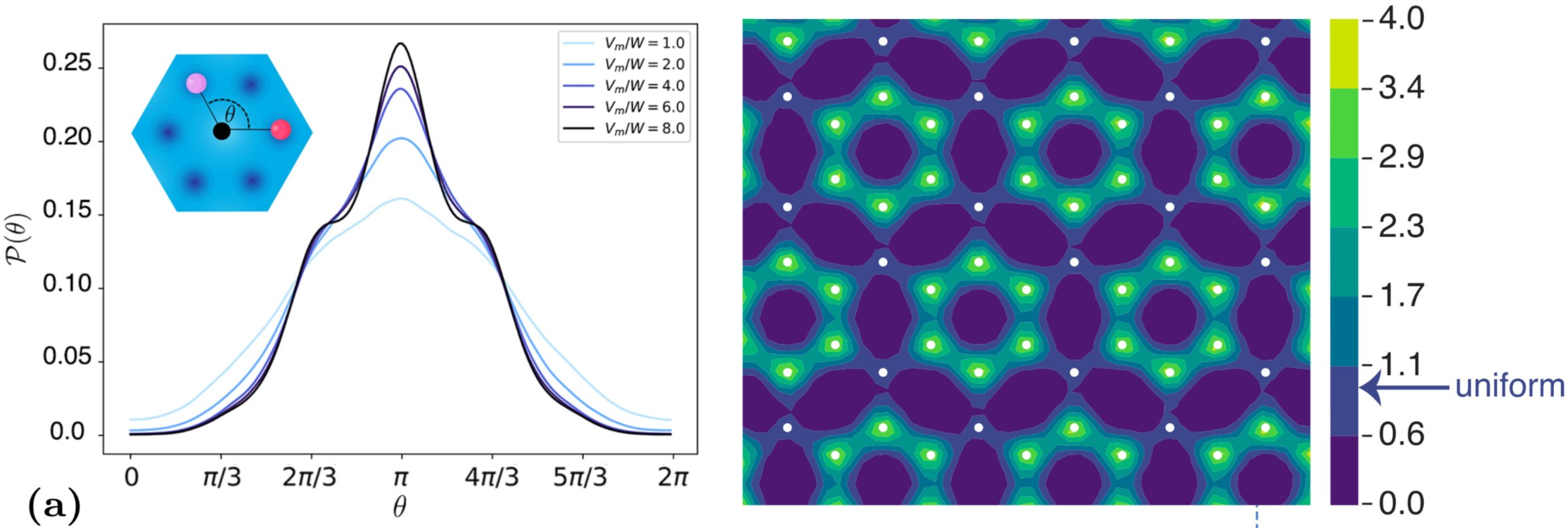
At half filling of a honeycomb moiré lattice, NQS finds a paired Wigner crystal: singlet pairs delocalized over honeycomb rings, a phase that density functional theory misses.

Abstract

We study the honeycomb moiré system at half filling. While DFT predicts the usual antiferromagnetic generalized Wigner crystal, NQS calculations discover a paired Wigner crystal, in which singlet pairs of electrons delocalize over honeycomb ring motifs that themselves form a triangular lattice. The pairing is stabilized by a delicate balance in which the kinetic energy gained by delocalizing over the ring edges out the slight increase in moiré potential energy and Coulomb interaction.

Ferromagnetic semimetal and charge-density wave phases of interacting electrons in a honeycomb moiré potential

Yubo Yang, M. A. Morales, S. Zhang

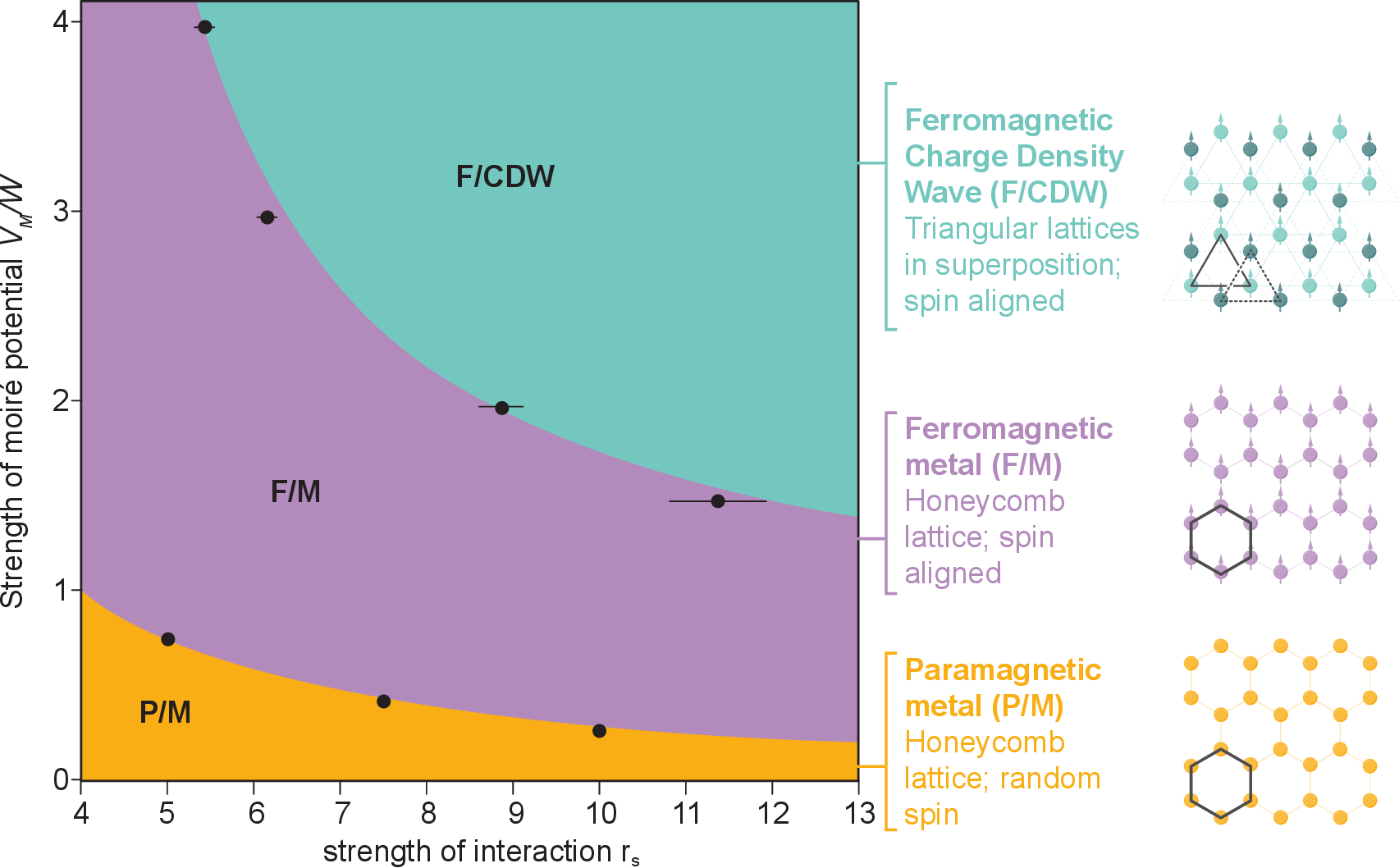
With increasing moiré depth at quarter filling, the electron gas on a honeycomb superlattice goes from paramagnetic metal to itinerant ferromagnetic semimetal to charge-density-wave insulator.

Abstract

We study the two-dimensional electron gas on a honeycomb moiré lattice at quarter filling, using fixed-phase diffusion Monte Carlo. The ground-state phases of this model are determined in the parameter regime relevant to current experiments. With increasing moiré potential, the system transitions from a paramagnetic metal to an itinerant ferromagnetic semimetal and then a charge-density-wave insulator.

Metal-insulator transition in a semiconductor heterobilayer model

Yubo Yang, M. A. Morales, S. Zhang

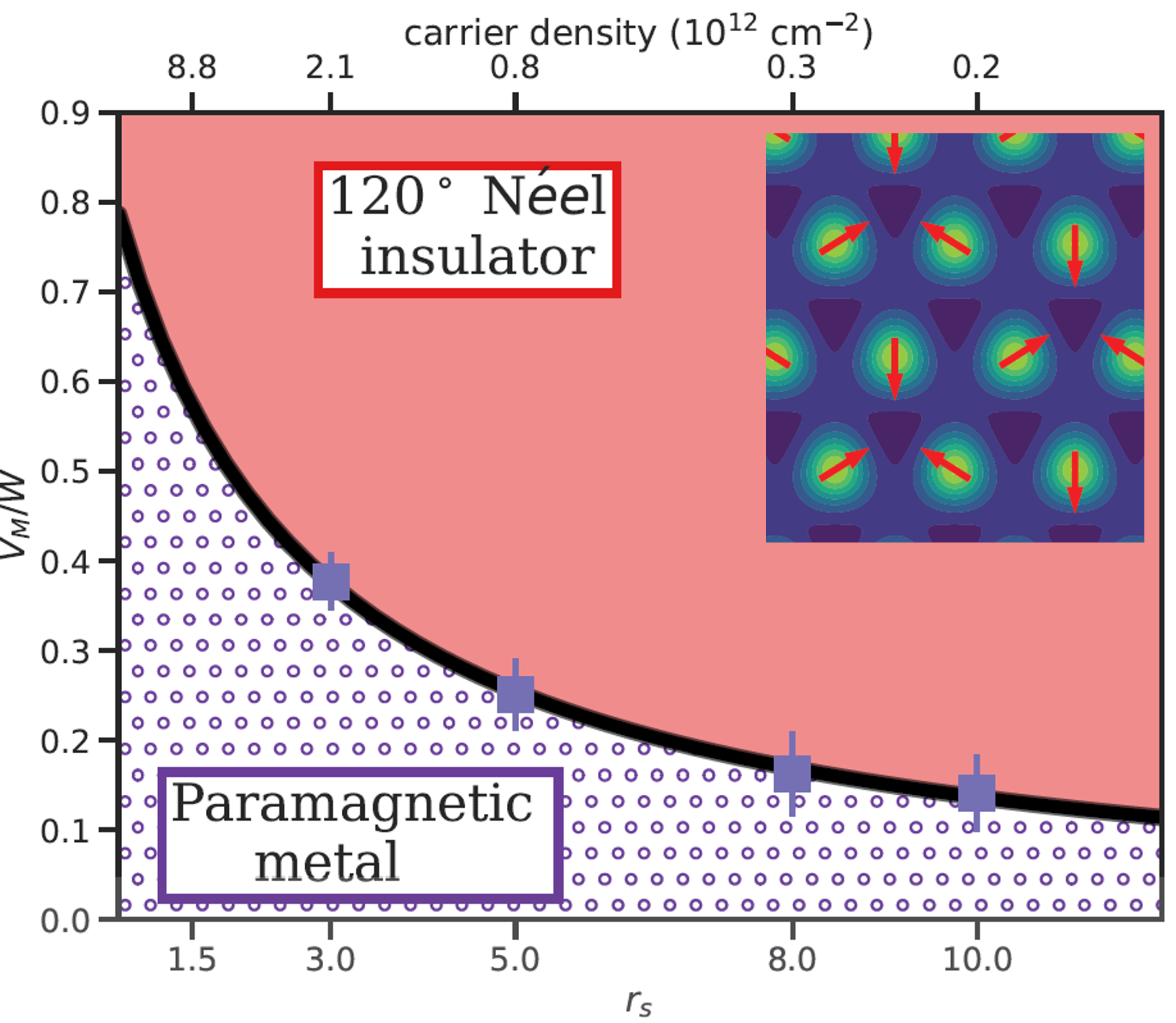
Two complementary QMC methods map the metal-insulator transition of the moiré continuum model and identify the hybrid functional that best reproduces it.

Abstract

We combine phaseless auxiliary-field quantum Monte Carlo and fixed-phase diffusion Monte Carlo to study the ground state of the moiré continuum Hamiltonian. We observe a metal-insulator transition between a paramagnetic and a 120-degree Néel ordered state as the moiré potential depth and the interaction strength are varied, find significant differences from Hartree-Fock and exact diagonalization studies, and suggest an optimal hybrid functional.

Neural quantum states and quantum Monte Carlo

The wavefunction of N interacting electrons is a function on a 3N-dimensional space. Quantum Monte Carlo samples that space stochastically, so accurate wavefunctions can be used directly. Neural quantum states replace hand-built ansätze with a neural network that is optimized variationally, giving one flexible description across phases. We develop and benchmark both.

Signature of short-range order in static response of the three-dimensional electron gas

M. H. Güneş, Yubo Yang, V. Gorelov, M. A. Morales, M. Gatti, L. Reining, S. Zhang

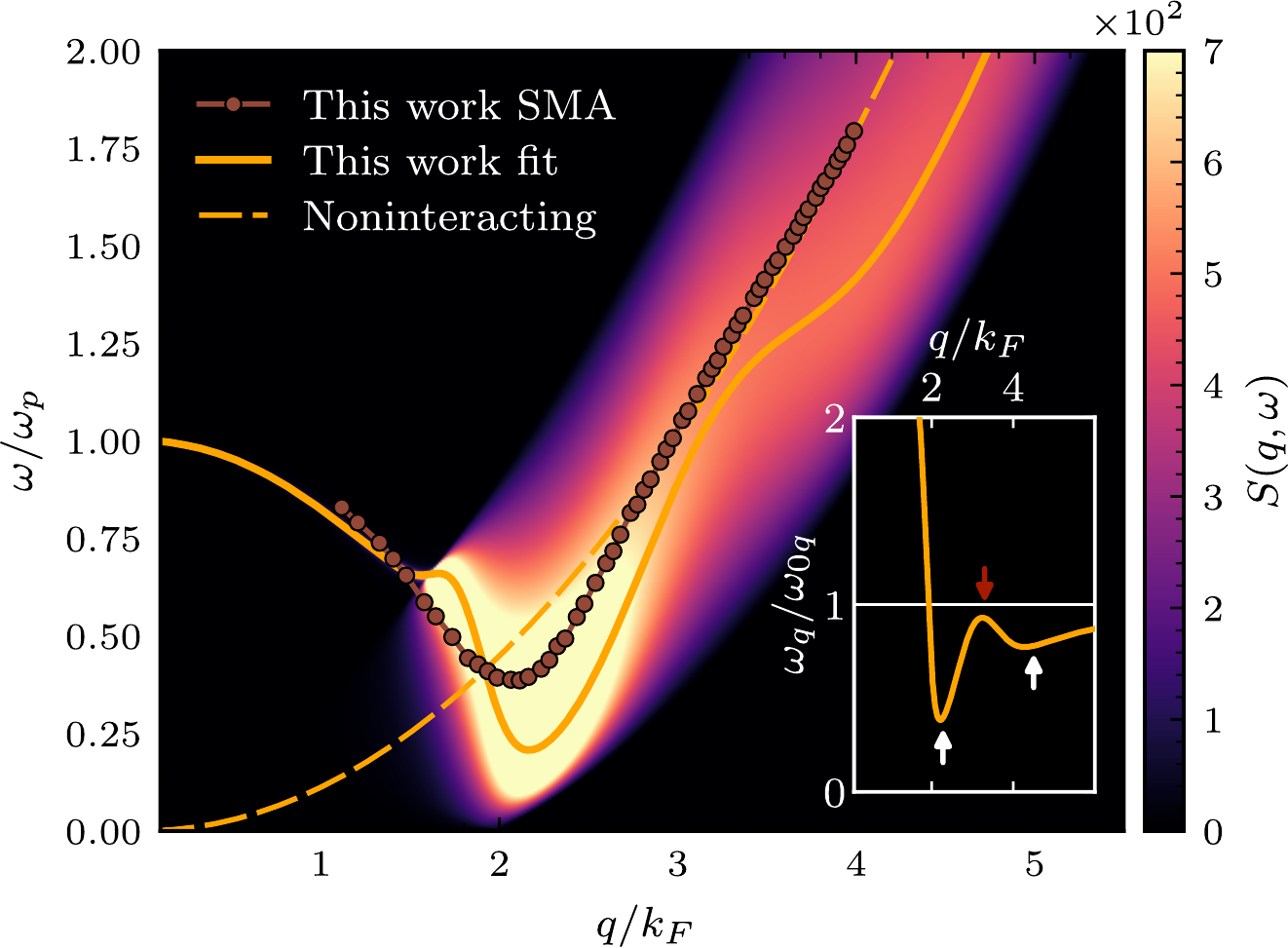
DMC finds a pronounced structure in the local field factor G(q) of the 3D electron gas, a fingerprint of short-range order. Fed into the dynamic response, it predicts a low-energy roton-like mode inside the particle-hole continuum.

Abstract

The static local field factor G(q) of the three-dimensional electron gas has lacked an accurate ground-state benchmark in the strongly coupled regime for three decades. Using diffusion Monte Carlo, we calculate the static density-density response function and G(q) across the liquid phase and find a pronounced structure in G(q) at intermediate wave vectors, already visible at metallic densities and growing with interaction strength. We identify it as a fingerprint of short-range order by showing that it is required to reproduce the static structure factor. Our parametrization, valid in the entire liquid phase, predicts a low-energy resonant mode inside the particle-hole continuum.

Static response of the strongly coupled electron gas from diffusion Monte Carlo

M. H. Güneş, Yubo Yang, V. Gorelov, M. A. Morales, M. Gatti, L. Reining, S. Zhang

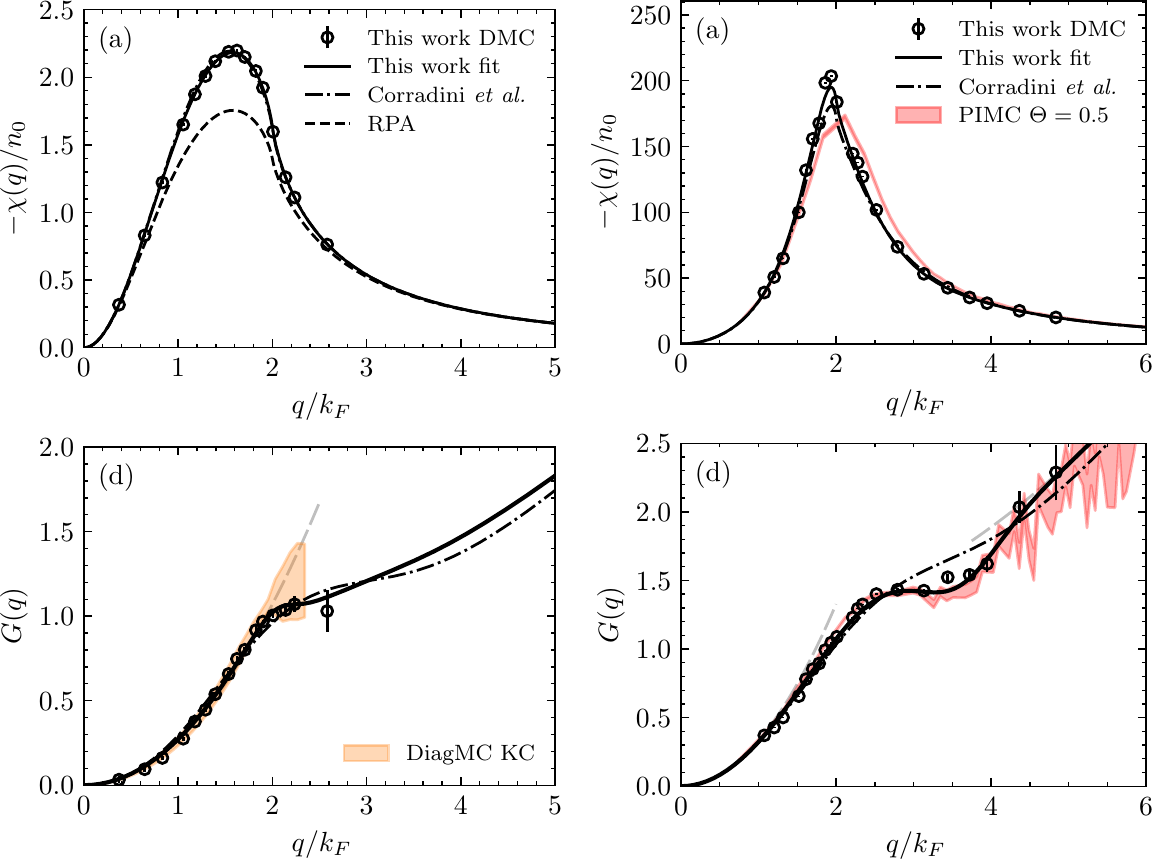
DMC extends the static response function and local field factor G(q) of the 3D electron gas from metallic densities to rs = 100. At strong coupling, G(q) develops a nonmonotonic structure tied to short-range order in the liquid.

Abstract

We present diffusion Monte Carlo calculations of the static density-density response function and the local field factor G(q) of the three-dimensional electron gas for 2 ≤ rs ≤ 100, and describe the methodological steps that enabled them: an optimized perturbing potential in the trial wave function, a closed-form expression for its optimal value, and the density dependence of the linear-response window. Backflow leaves the response unchanged and G(q) depends only weakly on system size, so Slater-Jastrow wave functions and modest system sizes suffice. Our results agree with earlier DMC at metallic densities and with diagrammatic QMC at rs = 2. At lower densities, G(q) develops a nonmonotonic structure at intermediate wave vectors, in quantitative agreement with finite-temperature path integral Monte Carlo, and we relate it to short-range order in the pair correlation function and static structure factor.

Unified variational approach description of ground-state phases of the two-dimensional electron gas

C. Smith, Y. Chen, R. Levy, Yubo Yang, M. A. Morales, S. Zhang

A single message-passing neural backflow ansatz describes the 2D electron gas across all densities, lowers the best known energies, and locates Wigner crystallization at rs = 37.

Abstract

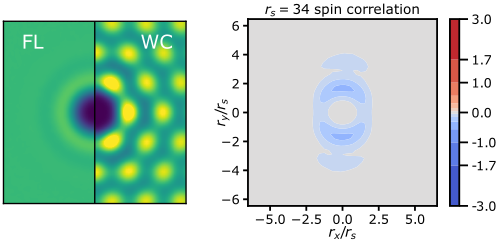
We use a single variational ansatz, a general backflow-type wave function using a message-passing neural quantum state architecture, for a unified description of the two-dimensional electron gas across the entire density range. The variational optimization consistently leads to lower ground-state energies than previous best results. Transition into a Wigner crystal occurs automatically at rs = 37 +/- 1, and the same ansatz strongly suggests intermediate states with enhanced short-range nematic spin correlations.

Machine-learned potentials for dense hydrogen

Interatomic potentials trained on quantum Monte Carlo energies and forces make it possible to run long molecular dynamics at QMC accuracy. We used them to map melting, solid phases, and the liquid-liquid transition of hydrogen at planetary pressures.

The phase diagram of fluid hydrogen near melting from machine-learned interatomic potentials trained on quantum Monte Carlo

S. Goswami, H. Niu, I. Saitov, M. Istas, Yubo Yang, S. Jensen, M. Holzmann, C. Pierleoni, D. Ceperley

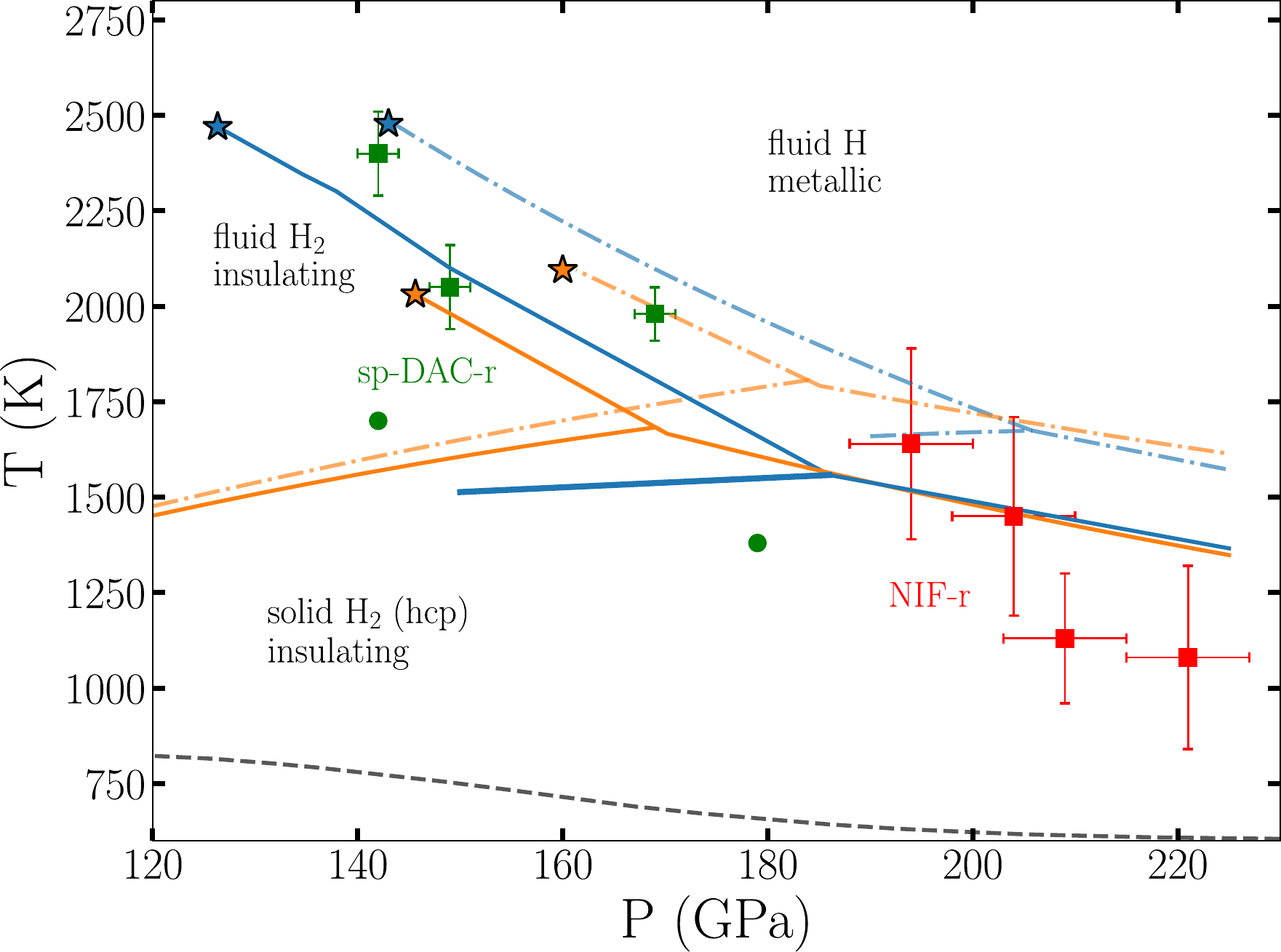
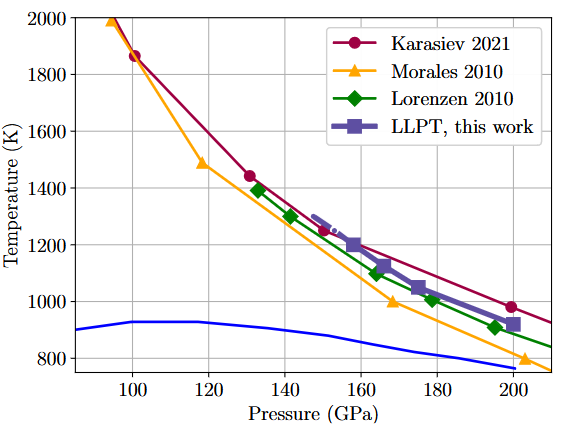
Two QMC-trained potentials, run with classical and path-integral molecular dynamics, both find a weak first-order transition from the insulating molecular liquid to the metallic atomic liquid. It ends at a critical point and meets the melting curve at a triple point.

Abstract

We perform classical and quantum path-integral molecular dynamics simulations of dense hydrogen using two machine-learned interatomic potentials, both trained on quantum Monte Carlo energies and forces. Both models show a first-order phase transition from the molecular to the atomic liquid, terminating in critical points whose locations were determined using finite-size scaling. Triple points, located at the highest temperature of the melting curve, are found at the intersection of the liquid-liquid lines with the melting curve and should lead to clear signatures in ramp compression experiments.

The liquid-liquid phase transition of hydrogen and its critical point: analysis from ab initio simulation and a machine-learned potential

M. Istas, S. Jensen, Yubo Yang, M. Holzmann, C. Pierleoni, D. M. Ceperley

A NequIP potential trained on DFT reproduces the liquid-liquid transition and, through finite-size scaling, pins its critical point near 1200-1300 K and 155-160 GPa.

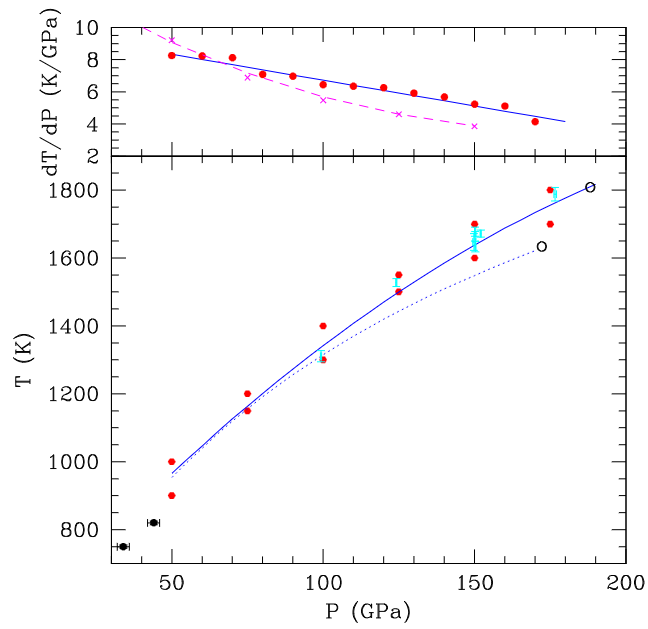
High temperature melting of dense molecular hydrogen from machine-learning interatomic potentials trained on quantum Monte Carlo

S. Goswami, S. Jensen, Yubo Yang, M. Holzmann, C. Pierleoni, D. M. Ceperley

A QMC-trained potential gives the melting curve of molecular hydrogen from 50 to 180 GPa for both classical and quantum nuclei.

Stable solid molecular hydrogen above 900 K from a machine-learned potential trained with diffusion quantum Monte Carlo

H. Niu, Yubo Yang, S. Jensen, M. Holzmann, C. Pierleoni, D. M. Ceperley

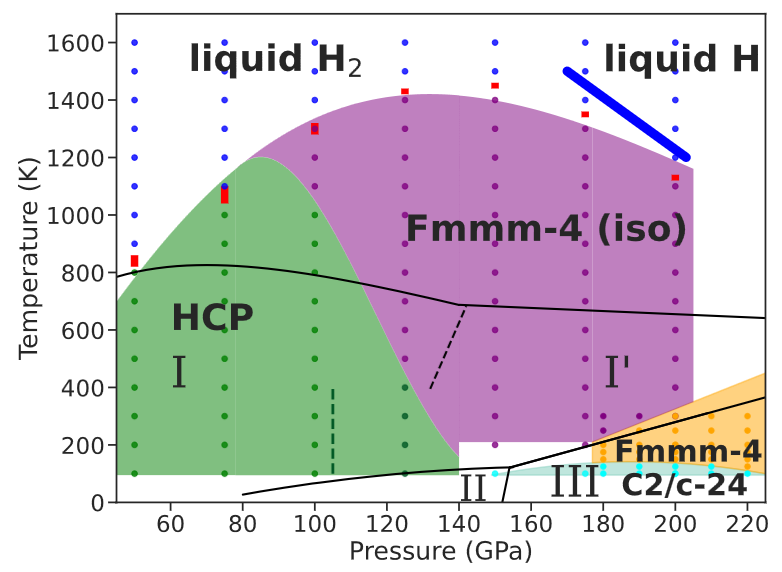
Path-integral molecular dynamics with a QMC-trained potential finds two new stable Fmmm-4 phases and a reentrant melting line.