
AI for quantum materials
We teach quantum wavefunction, often involving neural networks, to precisely describe electron dances in real experiments.
Department of Physics and Astronomy, Hofstra
Stage: moiré materials
When two 2D crystals are stacked with a small mismatch, they create a moiré interference pattern hundreds of times larger than the atoms. These "beats in space" encourage electrons to perform correlated "dances" and are highly tunable by gates, materials, etc.
Dancers: interacting electrons
When only a few electrons are doped into each moiré superstructure, their kinetic energy is low, making it much more important for the electrons to "correlate", creating the opportunities for novel "electron dances" where new phases of matter can emerge.
Camera: neural quantum states
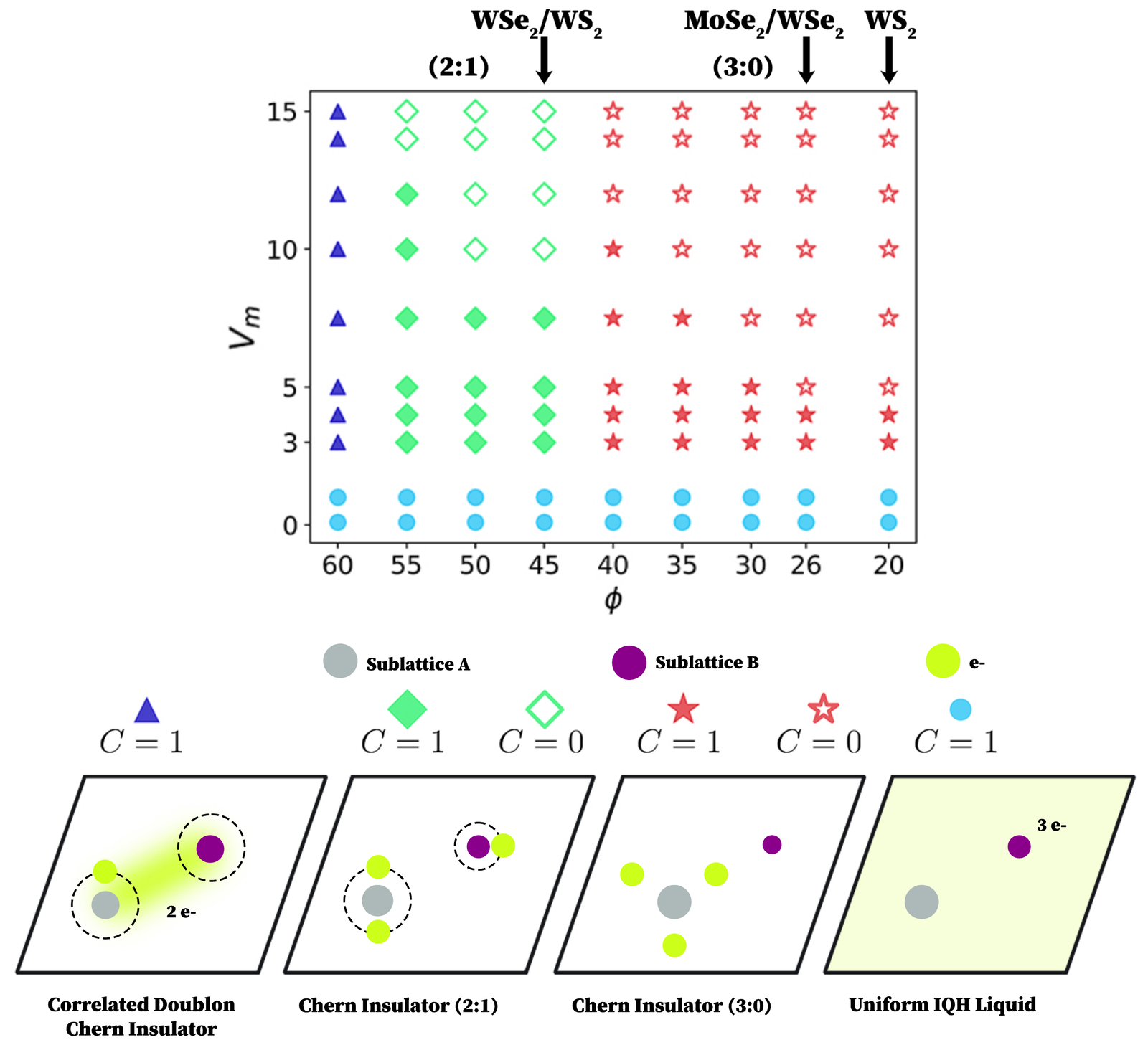
A neural network learns the many-electron wavefunction and finds the lowest-energy arrangement on its own. It can capture complex electronic phases and enable simulations of actual experimental devices.
From microscope to model
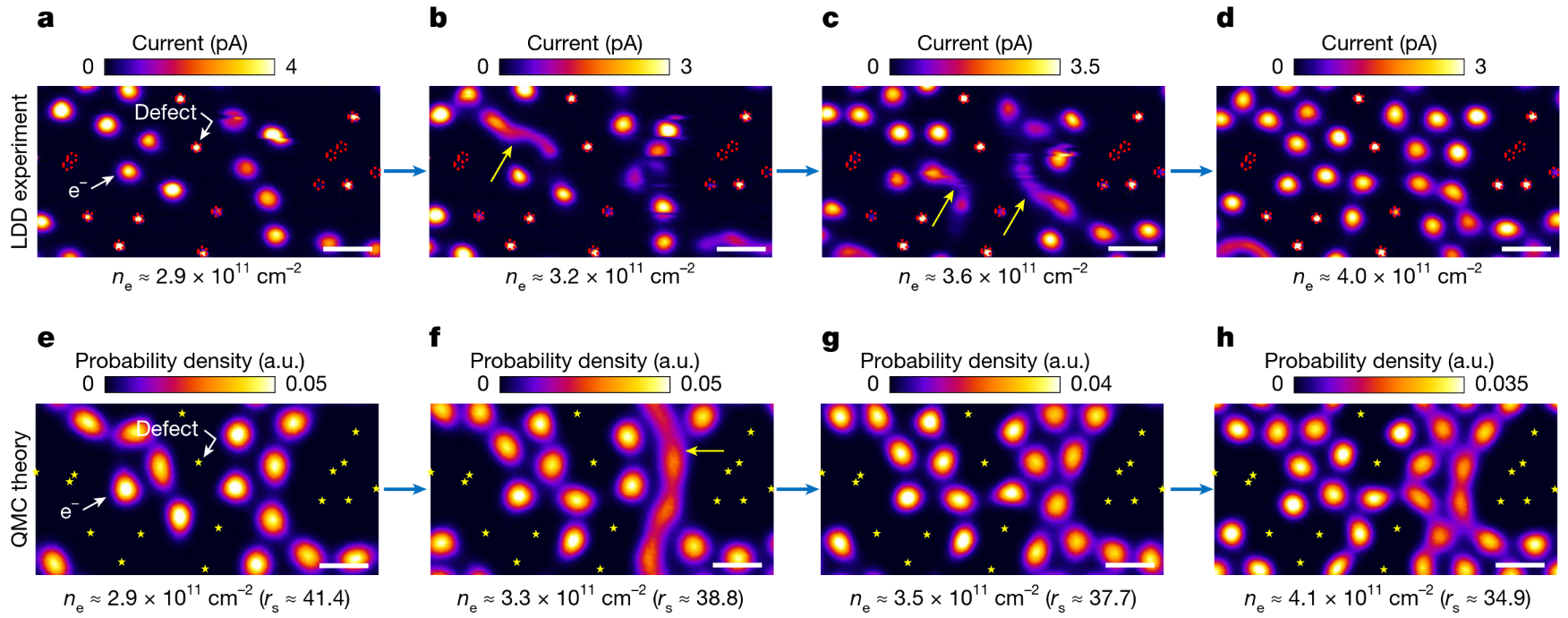
A scanning tunneling microscope maps every defect. The network takes it from there.
In bilayer MoSe2, defect positions measured by STM were fed straight into a neural quantum state. The simulated electron crystal matched the images and explained why disorders stabilize it.
Recent highlights
All research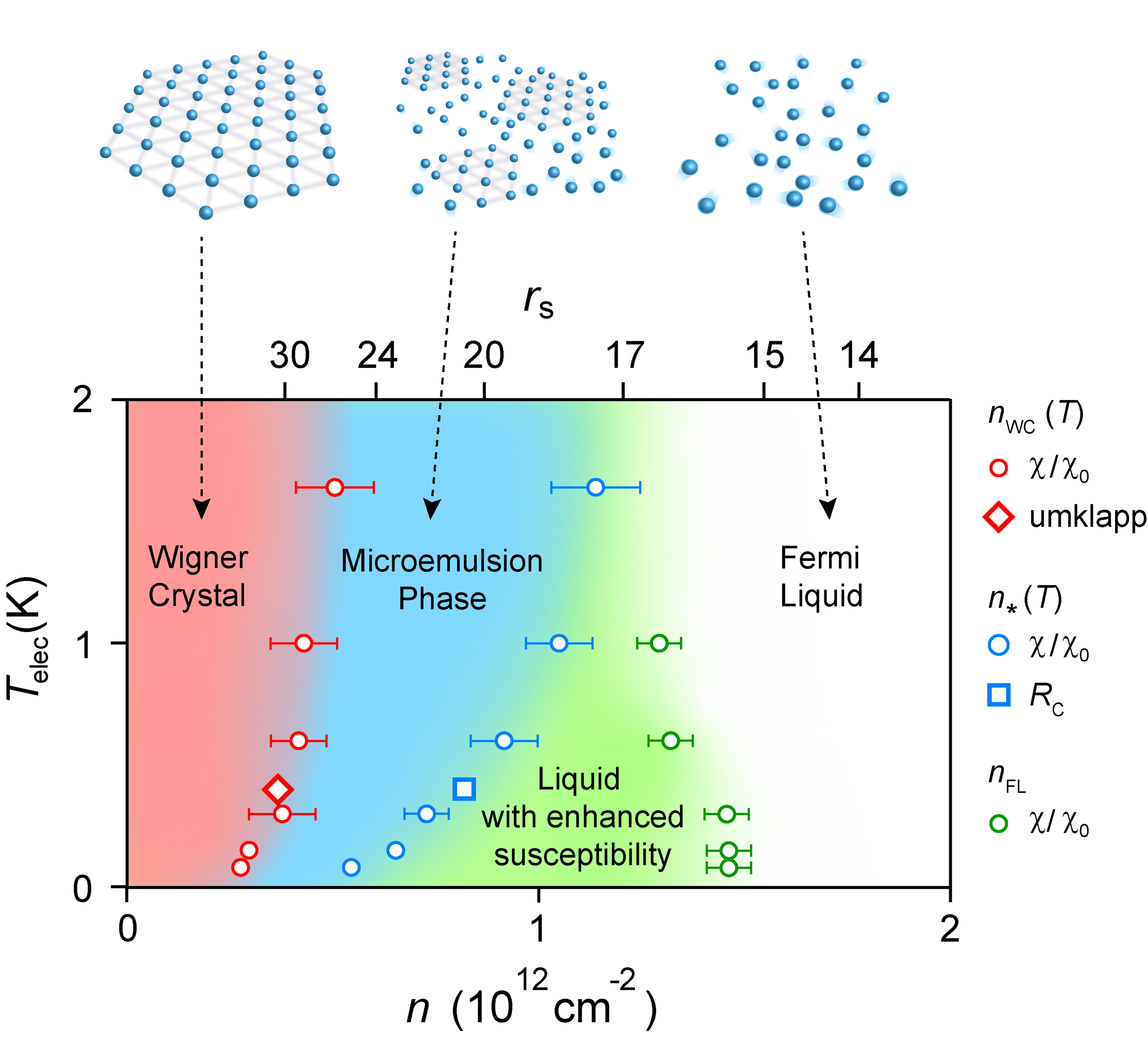
Supported by
National Science Foundation · LEAPS-MPS
Correlated Methods for Correlated Phases (DMR-2532734, 2025-2027)
Supports the group's research on moiré materials, undergraduate research training, and computational workshops for students at Hofstra and neighboring institutions.
NSF ACCESS · Computing allocation
Correlated methods for 2D quantum materials (PHY250273, 2025)
GPU and CPU time on NCSA Delta and DeltaAI for neural quantum state and quantum Monte Carlo simulations.